
Take the Rediff Biz Quiz and find out how much you know about India and its public sector companies.
.jpg)
PSUs may not be financially sound enough to plug deficit or revive investment.

Capital expenditure (capex) by 54 large central public sector enterprises (CPSEs) and five departmental arms with an annual capex target of Rs 100 crore and above has reached around 42.5 per cent of their annual target of about Rs 7.33 trillion in this financial year so far, a senior official from the Ministry of Finance told Business Standard. "The Centre is pushing the big public undertakings in the infrastructure and refinery sector to achieve 90 per cent of their target by the end of the third quarter," he said. The capex by this group of CPSEs stands at around Rs 3.1 trillion in the April-August period so far.

Bharti Airtel's homegrown cloud platform, Airtel Cloud, has acquired approximately 40 customers within a year of its launch, with a significant portion coming from the manufacturing sector. The platform, designed for Indian companies, offers sovereign, telco-grade cloud infrastructure, connectivity, and GenAI-based provisioning, addressing the growing demand for secure, India-hosted data solutions, particularly for sensitive workloads and regulated sectors.

Vice President CP Radhakrishnan launched Gnani Artha, an end-to-end sovereign AI stack for Indian enterprises and public institutions. He emphasised that new technologies, including AI, will enhance ease of work and create more jobs, drawing parallels with the IT industry's growth. The initiative, backed by the India AI Mission, aims for self-reliance and includes the Gnani Evon v3.3 language model and Gnani Plexus AI platform, offering cost-effective Indic language capabilities.
Vice President CP Radhakrishnan launched Gnani Artha, an end-to-end sovereign AI stack for Indian enterprises and public institutions. He emphasised that new technologies, including AI, will enhance ease of work and create more jobs, drawing parallels with the IT industry's growth. The initiative, backed by the India AI Mission, aims for self-reliance and includes the Gnani Evon v3.3 language model and Gnani Plexus AI platform, offering cost-effective Indic language capabilities.

The Indian banking sector could be due for a rise in profitability after several quarters of net interest margin (NIM) compression. The Q2FY26 results suggest NIMs have bottomed out.

Private corporations in India invested approximately 30.3 trillion in fixed assets during FY25, marking a 7 per cent increase from the previous year, according to the statistics ministry. This growth in private capital expenditure contrasts with a slowdown in government capital spending.

The move comes amid growing demand from organisations in India for local access to Claude.

A three-day 'AI Champions for Digital Governance' programme has commenced in New Delhi, hosted by ITDC, SCOPE, and LBSNAA. The initiative aims to train senior leadership and operational teams in applying artificial intelligence within public sector organisations, aligning with the IndiaAI Mission. Experts highlighted AI's role in improving efficiency, productivity, and public service delivery, while also emphasising responsible adoption and data quality. The programme seeks to build an AI-ready nation and contribute to India's vision of future-ready governance systems.
A three-day 'AI Champions for Digital Governance' programme has commenced in New Delhi, hosted by ITDC, SCOPE, and LBSNAA. The initiative aims to train senior leadership and operational teams in applying artificial intelligence within public sector organisations, aligning with the IndiaAI Mission. Experts highlighted AI's role in improving efficiency, productivity, and public service delivery, while also emphasising responsible adoption and data quality. The programme seeks to build an AI-ready nation and contribute to India's vision of future-ready governance systems.

Tata Consultancy Services (TCS) has announced a global partnership with AI major Anthropic to help enterprises accelerate their adoption of artificial intelligence, including equipping 50,000 TCS employees with Anthropic's Claude AI models.

Newly listed companies Vedanta Aluminium Metal, SBI Funds Management and Manipal Health Enterprises have entered the Rs 1 trillion mcap list since March 2026.

The government introduced the SHANTI Act, 2025, to support the mission and open the sector to private participation.

Divestment in top PSUs could make the ETF as big as Rs 30,000 crore.
India's MSME sector faces a significant formal credit gap of approximately Rs 60 lakh crore, with traditional channels meeting only a fraction of the demand. A new report suggests that a centralised, interoperable digital layer could effectively bridge this gap and enhance productivity across the formal business sector by digitising workflows and enabling cash-flow-based underwriting.

RBI Governor Sanjay Malhotra stated that the central bank consistently views fintechs as 'valuable partners' in shaping India's future financial system, crediting the sector with expanding financial inclusion, enhancing customer experience, and streamlining credit delivery, particularly for MSMEs.

A Public Interest Litigation has been filed in the Supreme Court challenging the Centre's decision to impose a 0.4 per cent Merchant Discount Rate (MDR) on UPI person-to-merchant transactions exceeding Rs 2,000. The plea argues that the levy was introduced without adequate statutory safeguards, transparency, or public consultation, and questions its constitutional validity and potential adverse effects on merchants and consumers.

Hyderabad-based Midwest Ltd has become the first Indian private company to secure overseas critical mineral mines, sealing a deal with Indonesia's state-run PT Perusahaan Mineral Nasional (PERMINAS) to ensure a long-term supply of rare earths.
Karnataka Chief Minister D K Shivakumar met with AI major Anthropic to discuss a long-term partnership aimed at accelerating AI adoption across governance, education, healthcare, research, and the state's startup ecosystem. The collaboration focuses on deploying AI solutions responsibly, ensuring data privacy, and developing AI-focused skilling programmes and an AI University.

India's public sector banks (PSBs) have seen their net profit nearly treble over the past five years, reaching a record Rs 1.98 trillion in FY26, driven by significant improvements in asset quality and sustained lending growth across key economic sectors.

Indian banks anticipate a reduction of up to 50 basis points in their funding costs due to a surge in liquidity from robust Foreign Currency Non-Resident (Bank), or FCNR (B), flows, lessening their reliance on more expensive certificates of deposit (CDs).

A rocket designed and developed by ISRO is being transferred to industry for production.
Nine ISRO associations want to know whether this is simply an effort to expand India's industrial capacity or part of a larger policy under which ISRO itself will eventually withdraw from rocket manufacturing.

State-owned Life Insurance Corporation of India (LIC) has reported a net profit of over Rs 23,400 crore for the January-March quarter, making it the highest profit-making firm in the Indian financial sector during this period, surpassing major banks like SBI and HDFC Bank.

J R D Tata, chairman of the Tata group from 1938 to 1991, said that whenever he had to make a difficult decision, he would ask himself, what will be good for India, and what will be good for the Tatas. If he had a doubt, he would decide in favour of India. In the long run, it would turn out well for the Tatas too, he said, points out Arun Maira.

Indian information technology (IT) stocks, led by Infosys, experienced a significant selloff, dragging the Nifty to a two-month low, primarily due to escalating West Asian tensions pushing crude oil prices higher, and concerns over upcoming large IPOs diverting funds from secondary markets. The sector is also grappling with the long-term implications of AI disruption.

In the next 36 months nearly 25 to 40 per cent of jobs will be under threat from AI and job losses are inevitable.

'Improved law and order and transparent governance have helped change UP's investment image.'

Divestment has emerged as a priority for the government following a moderation in direct tax collections.

The last major business daily to launch in India was Financial Chronicle in April 2008, preceded by Mint on February 1, 2007.
Tata Consultancy Services has partnered with French artificial intelligence firm Mistral to provide frontier grade AI solution, Mistral Forge, for enterprises across the world.

Tempsens Instruments India has emerged as the strongest mainboard IPO debutant of calendar year 2026 so far, delivering a 95.55 per cent gain on its listing day, surpassing all previous top performers and contributing to August being the strongest month for listing gains this year.

The Reserve Bank of India (RBI) is anticipated to make its highest-ever dividend payment to the government this year, providing a significant fiscal boost to address challenges, including those stemming from the ongoing Middle East crisis.

Competition Commission of India (CCI) chairperson Ravneet Kaur has warned that the rapid adoption of artificial intelligence (AI) could intensify anti-competitive practices in digital markets, including self-preferencing, discriminatory pricing, and market manipulation. She highlighted the CCI's ongoing study into AI's impact on competition and stressed the regulator's role in fostering growth while preventing abuse of dominance.

A government mandate requiring central public sector enterprises to use the Trade Receivables Discounting System (TReDS) for settling small business invoices is expected to significantly increase volumes on these platforms.

India's privatisation push, once projected as a cornerstone of economic reform, has suffered another setback, with the Centre set to call off the IDBI Bank stake sale, highlighting the political and structural constraints shaping the country's disinvestment policy, experts say.
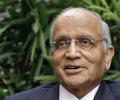
The government should not be running businesses as public sector companies are inefficient and do not generate enough resources to fund their own growth, according to Maruti Suzuki India chairman R C Bhargava. Public sector companies need support all the time to grow and need funds from the government for capital investments, he told PTI in an interview. "I have no doubt that government should not be in business. No way," he said when asked if governments should be in the business of running enterprises on the basis of his experience of witnessing the transformation of the then government-owned Maruti Udyog Ltd to Maruti Suzuki India Ltd, majority owned by Japan's Suzuki Motor Corporation.

The Indian government is accelerating its sale of minority stakes in state-owned companies, including a significant offer for sale (OFS) in Life Insurance Corporation of India (LIC) expected "very soon," to meet its 80,000 crore mobilisation target and reduce its holdings to 75 per cent in most listed PSUs by year-end.
State-owned enterprises in India are projected to significantly increase their overseas borrowings, potentially exceeding $15 billion in FY27, driven by the Reserve Bank of India's new concessional forex swap facility which offers a 3 per cent funding-cost advantage.

Prime Minister Narendra Modi cautioned against the 'weaponisation' of technology and critical minerals at the BRICS summit, advocating for cooperation to foster shared prosperity. Concurrently, Chinese President Xi Jinping announced plans for an open-source AI ecosystem for BRICS nations, positioning Beijing as a key technology partner amid global AI competition.
